
Buying meat in bulk and using your freezer wisely can save money, reduce waste, and make busy weeknight meals so much easier. If you’ve ever questioned the best ways to safely freeze, thaw, and re-freeze meat, I’ve got the answers!
No matter how many people you feed on a daily or weekly basis, meat is likely one of your biggest grocery expenses (and it just keeps getting more expensive!)
Over the last 20 years, one of the simplest “tricks” I’ve used to stretch our grocery budget and save hours in the kitchen is to buy meat in bulk (and then freeze it for later).
Freezing meat isn’t complicated, and it doesn’t even need to take much time — but I regularly get all sorts of questions about how to freeze, thaw, and re-freeze meat.
I’ve compiled many of my past freezer-related posts, as well as a bunch of helpful information I’ve learned over the years, to address the most common questions I get about freezing meat.
If you’d like to save time in the kitchen and money at the grocery store, keep reading for the best tips to freeze, thaw, and re-freeze meat!!

The Best Ways to Freeze Meats
As with most freezer foods, you want to make sure your meat is packaged well before you put it in the freezer (especially if you’re planning to keep it in the freezer for several months).
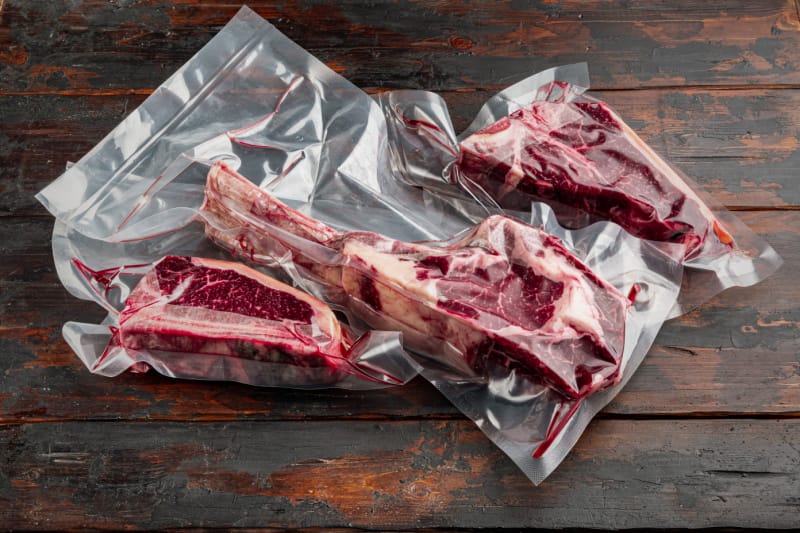
This can be as simple as buying a few packages of freezer bags, or as elaborate as purchasing a vacuum-sealing system.
It’s also best to pre-portion meat into separate containers before freezing.
For example, if you purchased 10 pounds of ground beef but will only cook 2 pounds at a time, it’s best to pre-portion 5 two-pound packages before freezing. This way, you can defrost only the meat you want to cook, instead of defrosting the entire 10-pound log and then refreezing the 8 pounds you didn’t use.
And, if you have access to a deep freezer, your meat will stay fresher longer (read more on this below).

What Happens When Meat Freezes?
When food is put in the freezer, any moisture in the cells turns into tiny ice crystals, which usually take up more space than their previous liquid state, causing tiny ruptures in the cells of the food. When the food is eventually thawed, these cells are not able to hold moisture in the same way as before they were frozen — which is why foods high in moisture (fruits, veggies, and meats) often have a different texture after they are frozen.
When you freeze, thaw, and refreeze a food, the second freeze will rupture even more of the cells, leaching out moisture and flavor, and changing the integrity of the product.
While your frozen food is likely still safe to eat after multiple freezing/thawing cycles, it won’t taste the same as when it was fresh. However, freezing and thawing meat does not change the nutritional value — in fact, freezing meat (and produce) can actually lock in more nutrients than letting it sit in your fridge for days.
All that said, freezing meat is the best, easiest, and fastest way to preserve it, as the freezing process drastically slows the enzyme activity that can lead to the deterioration of food quality. (Read more about freezing meat on the USDA website.)

Meats That Freeze Well
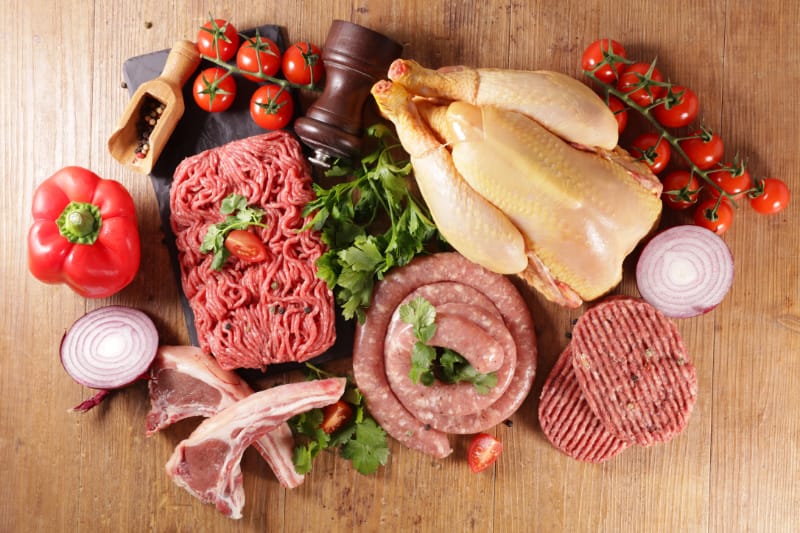
I’ve had success freezing almost any type of meat — spiral hams, turkeys, chicken breasts, whole chickens, shrimp, salmon filets, beef roasts, steak, sausage, bacon, hot dogs, brats, meatballs, pork loins, pork chops, venison, you name it.
Also, as we’ll discuss more below, you can easily (and safely) freeze both cooked and uncooked meats.
FUN FREEZER FACT: You can freeze almost any food, except canned foods that are still in their tins (because frozen foods expand and could create a slight “break” in the tin, which would allow air and bacteria to get inside) and eggs that are still in their shells. Other foods, like lettuce and watermelon, will not thaw well, but you can freeze them.
Here’s a giant list of freezable foods.
How to Know if Frozen Meat is Safe
Assuming your freezer stays frozen (no power outages), the food in your freezer should be safe indefinitely, as bacteria cannot grow in a frozen environment.
However, that doesn’t mean your frozen meat will taste great forever.
When a recipe suggests a certain food can be “frozen for up to 3 months”, it’s not saying the food will suddenly spoil after 3 months. It’s simply stating that the quality of the thawed food might not be as appetizing after sitting in your freezer for 3 months.
Also, these freezer guidelines are estimates that depend on how and where your food is frozen.
For example, if you package each cut of meat in a heavy-duty vacuum-sealed bag and put it in the bottom of a chest freezer that is rarely opened, your meat will last significantly longer than thinly-wrapped meat from the grocery store placed in your kitchen freezer (which has wildly fluctuating temps due to being opened frequently).
Frozen Meat and Bacteria
Contrary to popular opinion, freezing meat that is already contaminated with bacteria will NOT “kill” the bacteria; it will simply stop it from spreading any further.
As soon as the meat is thawed, the bacteria will spread again.
This should not cause you to stress or worry about the meat in your freezer — as long as you put fresh meat into your freezer.
Guidelines for How Long to Freeze Meat
When it comes to meat, these are some general guidelines (from the USDA) for how long certain cuts of meat can be frozen without drastically altering the taste and flavor of the thawed product.
- Uncooked Bacon and Sausage = 2 months
- Ham, hot dogs, and lunch meat = 2 months
- Cooked meats (ground beef/turkey, shredded chicken) = 3-4 months
- Uncooked ground meats = 4 months
- Cooked or uncooked seafood = 4 months
- Uncooked Roasts, steak, chops = 4-12 months (depending on how it’s packaged)
- Uncooked Poultry = 4-9 months (depending on how it’s packaged)
- Uncooked Wild game = 8-12 months
Again, this does NOT mean that your meat will suddenly go bad after the allotted time in the freezer, but simply that the thawed version of your meat might not taste as good as before it was frozen.
I can personally attest to the fact that bacon, sausage, ham, hot dogs, and lunch meat can all be frozen for significantly longer than the suggested 2 months, yet still thaw wonderfully and taste great.
The Difference Between Deep Freezers and Frost-Free Freezers
If you plan to freeze a significant amount of food, you will definitely want to invest in a deep freezer as soon as possible.
A deep freezer (either a chest or an upright) is designed for long-term, bulk storage at a constantly low temperature. This saves on energy costs and prolongs the onset of freezer burn for meats and other frozen foods.

The freezer attached to your refrigerator is a “frost-free freezer,” as it doesn’t get that frosty build-up that you can sometimes find inside deep freezers. However, in order to maintain a “frost-free” environment, the freezer uses automated, periodic heating cycles to prevent ice buildup. This is convenient for the user, however those constant temperature fluctuations can cause freezer burn.
Frost-free freezers are best utilized for short-term freezer storage of items you will eat within a few weeks, not store for months.
But again, I want to reiterate that your meat will not “spoil” or be filled with bacteria if you freeze it in a frost-free freezer for 12 months. It simply might be a little tougher, a little dryer, maybe a bit more freezer-burned.

How to Safely Thaw Frozen Meat
Let the record show that thawing meat by setting it on the counter for several hours is apparently not safe… however, I will admit to thawing plenty of frozen meat on the counter over the last 20 years, and we’re still here to tell about it. ☺️
That said, here are the 3 safest ways to thaw frozen meat.
1. Thaw Meat in the Refrigerator.
This is the best and most highly recommended method to thaw frozen meat as it assures the meat will never get warmer than 36ºF (the temp inside most refrigerators). Keeping the meat consistently cold throughout the thawing process means there’s less chance of bacteria multiplying or spreading within the meat.
However, thawing meat in the refrigerator also requires the most planning ahead. Large cuts of meat could easily take 2-4 days to fully defrost in your refrigerator — which is why advanced meal planning comes in handy. That said, if you defrost meat in the fridge, it can sit in the fridge for several days after it’s thawed, as the temperature has stayed consistent throughout the entire defrosting period.
CON = it takes a long time
PRO = it’s the most “hands-off” method and produces the best-tasting meat. It also gives you some wiggle room as to when you use the meat after thawing.
2. Thaw Meat in Cold Water.
A slightly faster way to safely thaw meat is to put the meat in a water-tight plastic bag and submerge it in cold water. (35-40º)
It’s suggested that you change the water every 45 minutes so it stays cold enough to prevent bacteria from growing. You’ll also want to make sure no water gets in with your meat, as soggy meat is not that appetizing.
CON = it requires a lot of hands-on time to constantly change the water.
PRO = it’s faster than in the fridge (especially for smaller cuts of meat like bacon, sausage, etc.)
3. Thaw Meat in the Microwave.
I was honestly surprised to find that thawing meat in the microwave is considered “safe “(from a bacteria standpoint). It’s also a much faster option… however, if you care about the taste or texture of your meat, you most likely won’t want to use the microwave, as it does alter the texture of the meat.
Also, if you are defrosting ground beef or ground turkey to use in burger patties or meatloaf, it will NOT stick together to form patties or a loaf if it has been defrosted via the microwave (yup, I know this one from experience too!)
CON = it can change the texture of the meat, and you need to use the meat right away after thawing.
PRO = it’s the fastest method if you’re in a pinch

Can I Re-Freeze Meat After it Thaws?
The short answer is “yes”.
However, there are a few caveats…
You can safely re-freeze uncooked AND cooked meats as long as they are properly thawed (see guidelines above).
You can also safely re-freeze uncooked meats that are fully cooked and cooled before re-freezing.
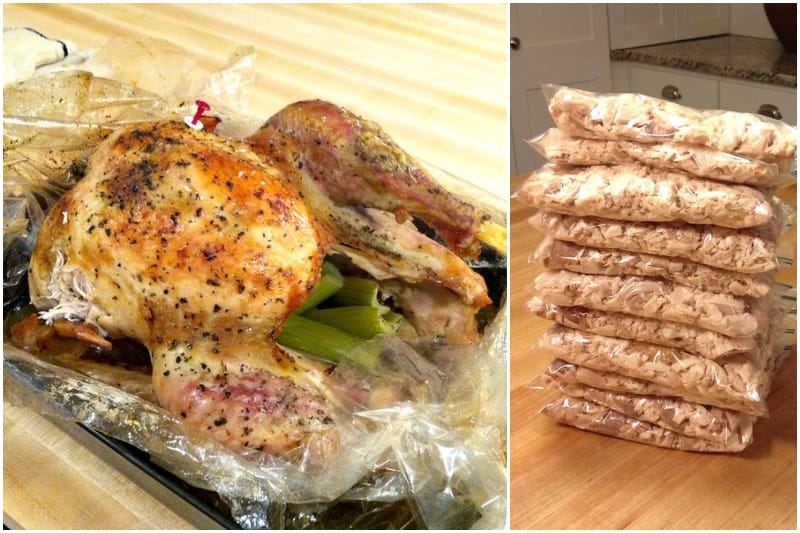
Here are a few examples:
TURKEY: When I buy a frozen turkey, I defrost it in the fridge for several days, then roast it. After I roast it, I shred the meat, portion it out into 2-cup freezer bags, and put it back in the freezer. (See photo above).
COOKED GROUND BEEF: I regularly defrost and cook several pounds of ground beef to make soups, tacos, and casseroles. Once it’s cooked, I drain it and package it into 2-cup bags for the freezer.
UNCOOKED GROUND BEEF: I defrost several pounds of ground beef to make a few meatloaves. Once the meat is defrosted, I add the ingredients to make my meatloaf, form the meatloaves, cook one for dinner, and wrap the other UNCOOKED meatloaves in several layers of plastic wrap and put them in the freezer (still uncooked) for future meals. (See photo below).

More Freezer Posts
I’ve saved so much time, money, and energy by utilizing our freezers over the last 20 years — here are all the posts I’ve shared about freezer cooking.
Do you have any tips to safely freeze or thaw meat?
Davetta Langham says
I had meat in my sons freezer that went into an ice chest to take to my home 3 hrs. away. Done this many times and it stays frozen. However, this time I had lamb chops & pork chops that were smoked (cooked) and I had bought fish sticks & orange chicken from freezer section at the store. All was put into the ice chest along with milk, eggs and a few other items. The trip turned into 2 days. The meat was thawed but still extremely cold and the milk etc. was still cold. The ice was unmelted in the ice chest. I put all meat in my freezer when we got home and the other things in the fridge. The milk & eggs, fruit etc. are all good. I’ve eaten them. So, my question is…. is the meat ok to eat.
Andrea says
Honestly, there’s really no way I can answer this question. I guess just use your own personal judgement! Sorry!
Teresa Bishop says
My son took a pork loin and put it in the sink to defrost but forgot to put cold water in it. Can you refreeze it and will it be safe to eat
Andrea says
Honestly, I think it should be fine. However, if you’re unsure, you could always just cook it now and then freeze the already cooked meat.
Pat says
I just defrosted our freezer. Since it sits in the garage it has to be defrosted about twice a year. I take everything out and sort it into laundry baskets. I usually do this on a relatively warm day. Once it’s empty I prop the door open and put a tower fan in the door space, on high and go away for about an hour. When I come back it’s usually completely defrosted so I wipe it out, put my food back in, turn it on, shut the door. Because it’s done quickly and the frozen food is all sorted and covered it stays frozen. I have tried to find a place in the house rather than the garage but to no avail, we have no basement in Oklahoma, the water table is too high and basements here tend to leak.
Marguerite says
Instead of laundry baskets use insulated coolers for content of freezer-while waiting for freezer to defrost.
Jennifer says
Ok so I have an 8 lb pork loin which I bought last Wed and stuck in the freezer (stupidly without dividing it first). I took it out Fri to start defrosting (on the counter all morning – bad girl, I know) and then realizing it wasn’t going to be defrosted in time to make for dinner (duh), stuck it in the fridge to continue defrosting until the weekend when I could cook it all up. Needless to say, it’s still in the fridge, since we chose other options for dinner (I have never been a good meal planner). So now, I am planning on crockpotting half of it tonight (Wed) and roasting the rest tomorrow. Do you think it’s gone bad by now? I really don’t want to chuck 8 lbs of pork, but don’t want to get my family sick either.
Andrea says
I think it should be fine, but I would put leftovers in the freezer sooner than later.
Also, in general, you probably didn’t need to put the pork loin in the freezer on Wednesday if you were planning to cook it on Friday — it would be totally fine in the fridge for Thursday and you’d probably preserve more of the flavor as well 🙂
Debbie says
Thank you for all the info, and verifying them with your sources for us. I’ve done the counter defrosting many times and I blame it on my mom :-). None of us has ever gotten sick from it, thank goodness.
Andrea says
yeah, I’ve done it MANY times too and we’ve never gotten sick. 🙂
Rose says
Thx for the informational post!!!! Love your daily posts!!! You mentioned the zaycon chicken breasts…can you plz let me know if you would recommend that service…I just found out about it and we do get it in our area. Are the chicken breasts all individually wrapped? Or, 49lbs in a box–loose? How do you store those? Thx for your time
Andrea says
so Zaycon Fresh is a great service — BUT the meat usually just comes in a ginormous box all mixed together. The breasts are NOT individually wrapped, so it’s a bit of a pain the first day I bring it home.
I usually always plan to divvy up (and cook) the meat that first day.
So I’ll cook A BUNCH of it and shred it all for the freezer. Then I’ll package more of the uncooked breasts into smaller freezer bags for grilling or using in recipe.
Also, I often split the 40 pounds with my sister or mom — so I don’t have to deal with all 40 pounds at once 🙂
Avia says
Good information! I confess to unthawing on the counter. I’ll have to try to break that habit.
Andrea says
eh, we’ve all done it 🙂
Eileen says
Hi Andrea.
Love ur blog. Quick question do u always defrost ur frozen meat eg frozen chopped chicken breast for enchiladas etc could u not just add these frozen?
Andrea says
Yeah, I almost always defrost it at least enough so the chicken chunks aren’t all stuck together — otherwise it’s really hard (basically impossible) to mix the meat with the suace and other filling ingredients.