
Teaching your kids to stay organized doesn’t have to mean constant reminders, nagging, or arguments. Instead, focus on a few small maintenance habits. Over time, those little habits become routines, routines become rituals, and staying organized starts to feel like second nature.
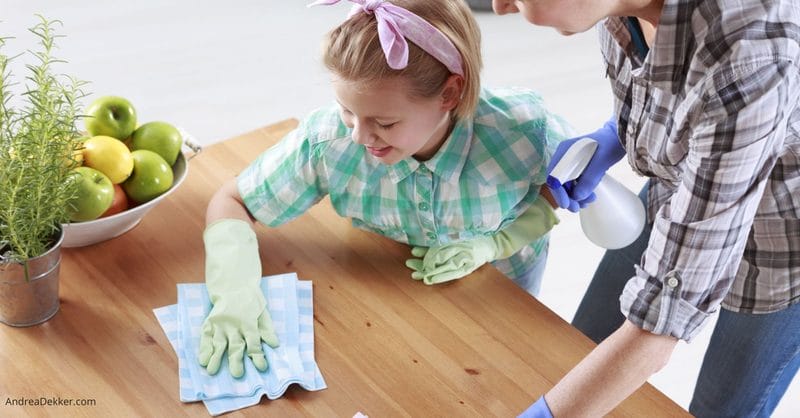
If you feel like you spend half your day reminding your kids to put their shoes away, hang up their backpacks, clean their rooms, or pick up their stuff, you’re not alone.
I’ve certainly had seasons of motherhood where I felt like a broken record, and it’s exhausting and frustrating for everyone involved.
But I’ve learned that staying organized isn’t something kids simply know how to do. It’s a skill they need to learn and develop over time through repetition, routines, and lots of practice.
But it IS a learnable skill (for kids and adults 🙃).
Of course, the ultimate goal isn’t to raise children who keep an immaculate bedroom or alphabetize their books.
The goal is to help them develop small habits and rituals that make staying organized second nature.
If that sounds good to you, here are a few tips that will help!
Give Everything a Home
It’s very difficult to teach a child to put something away if you aren’t even sure where it belongs.
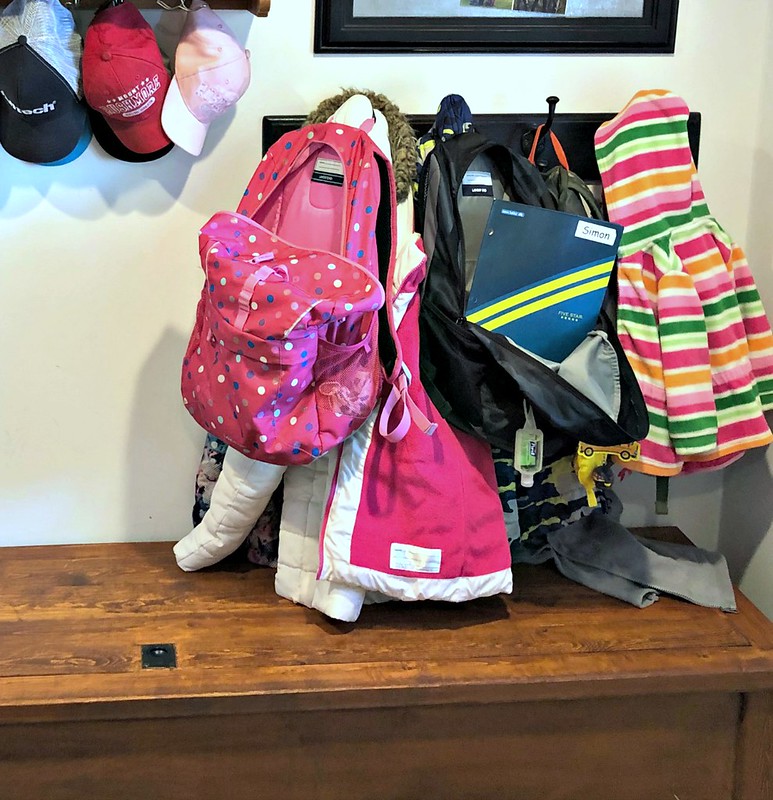
Everyday items should have a simple, obvious home.
- Backpacks have a hook.
- Shoes have a basket or shelf.
- Coats have a hook.
- School papers have a designated spot.
- Sports equipment has a bin.
- Dirty laundry has a hamper.
The more obvious the home, the less mental energy your child needs to put something away, so don’t be afraid to make the system ridiculously simple.
A five-year-old doesn’t need a beautifully labeled organizational system with matching bins.
A big basket that says “toys” or “shoes” will likely work better.
Remember, the best organizational system is the one your kids will actually use.

Create Reset Rituals
One of my favorite ways to make organization easier is to attach little clean-up rituals to things your kids already do.
Instead of randomly asking them to clean throughout the day, establish a few predictable reset points.
For example:
- When they wake up: Make their bed.
- Before leaving the house: Brush teeth, brush hair, pack lunch and water bottle.
- When coming home: Shoes away, backpack hung up, lunchbox emptied.
- Before meals: Bedroom or play area gets a quick reset.
- After meals: Clean up their spot at the table and put their dishes in the dishwasher.
- Before bed: Shower, dirty laundry in the hamper, snack, water bottle, and backpack ready for tomorrow.
- Before starting something new: The previous activity gets put away.
These rituals eventually become automatic (even without any reminders).
You don’t have to say, “put your dishes away”, because they automatically do it after every meal. You don’t have to remind them to hang up their backpacks and coats because they are habits the kids don’t even need to think about.
It might take some time, but these “reset rituals” eliminate the need to constantly tell our kids what to do because they already know what is expected.

Use the One-Minute Rule
Kids are more willing to do something when they know it won’t take long.
So teach them to take care of little things immediately when they notice them.
If it takes less than a minute, just do it.
- Put the cup in the dishwasher.
- Hang up the jacket.
- Throw away the wrapper.
- Put the shoes away.
- Empty the backpack.
- Return the book to the shelf.
- Put the scissors back in the drawer.
It might seem insignificant, but you’re building a powerful mindset and really great habits.
We don’t have to wait for a giant cleaning session to make a space better.
I can take care of small things as I go.

Make Maintenance Easier Than Cleanup
Maintenance is my motto for home life… because I know how much easier it is to maintain something versus totally overhaul it.
A child who puts five things away each day won’t have to clean up fifty things later.
A child who empties their backpack every afternoon won’t have to dig through three weeks of papers when they can’t find their homework.
A child who puts dirty clothes in the hamper won’t have a mountain of laundry on the floor at the end of the week.
This is why those tiny habits matter so much (and truthfully, so many little tasks can be done in a minute or two (see the “one-minute rule” tip above).
We’re not trying to make our children clean freaks.
We’re teaching them how to prevent small problems from becoming big ones.

Finish the Job
When you take something out, put it away when you’re finished.
Not eventually.
Not before bedtime.
Not when Mom gets frustrated.
When you’re finished.
- Finished with the Lego set? Put it away.
- Finished with the art project? Put the supplies away.
- Finished with the shoes? Put them away.
- Finished with the snack? Clean up the wrapper and dishes.
You’re teaching them to complete the entire task—not just the enjoyable part.
This skill will help them long after childhood too.

Maintain Your Own Spaces
Our kids learn far more from what we consistently do than from what we repeatedly tell them to do. ☺️
If they see us putting things away when we’re finished, resetting the kitchen before bed, preparing for tomorrow, and taking care of little messes before they become big ones, they’re absorbing those habits.
We can even narrate what we’re doing occasionally:
“I’m putting this away now because I’ll need it again tomorrow.”
“I’m going to clean up the kitchen before I sit down so I don’t have to deal with it later.”
“We need to put all the laundry away so it doesn’t sit in baskets all week.”
“I’m putting my keys in the same place so I know where they’ll be tomorrow.”
These little comments help kids understand that organization isn’t about being perfect. It’s about making life easier for your future self.
Don’t Expect Perfection
Your kids are going to forget.
They’ll leave their shoes in the wrong place.
They’ll abandon a Lego project in the middle of the living room.
They’ll shove dirty (or clean) clothes under their bed.
They’ll need reminders.
That’s normal.
When they’re little, you do it with them, then you remind them, then you ask questions. Eventually, you expect them to notice and handle it themselves.
It’s a gradual process…some children will get there faster than others.
Remember: You’re Teaching Life Skills, Not Cleaning Skills
It’s easy to get caught up in whether our kids’ rooms are clean or not.
But ultimately, this isn’t really about bedrooms, backpacks, or shoes.
We’re teaching our children how to manage their belongings, their time, and eventually their responsibilities.
We’re teaching them to notice what needs to be done and do it.
We’re teaching them to take care of small things before they become overwhelming.
We’re teaching them to prepare for tomorrow.
We’re teaching them that a little maintenance today can save a lot of work later.
And perhaps most importantly, we’re teaching them that organization isn’t something you do once in a while when things get out of control. It’s something you practice in little ways every day.
Rather than constantly fighting with your kids about clutter and organization, look for one or two tiny habits you can begin practicing together (I listed several above).
Start small.
Repeat it often.
And give it time.
What are your best tips to help kids stay organized?
Steph says
Right now I’m on a big ‘enabling environment’ kick.
My kids are 3 years, 19 months, and 9 weeks old. Being so busy with them has forced me to be and stay organized.
I hung some hooks low at the front door and my oldest hung up her coat and hat without being prompted. She noticed the hooks and just did it, so my second followed her lead. This has saved me from picking up after them as much if I just create an environment where they can be more independent.
I’m also working on toy bin labels with a little photo on it of the bin’s appropriate contents. This way they can see (can’t read yet), what goes where when it’s time to tidy up (Dora’s clean up song is pretty fun! Available on iTunes).
Also buying some extra step stools helped. My little ones can turn off the lights when they come upstairs now, and get on the toilet by themselves. All helpful when nursing a newborn!
Those are just a couple of my tips! Seems to work for us!
Thanks for all you do! Keep up the great work!
Michelle says
As the mom of 4 kids, I’ve come to realize that sometimes clutter is inevitable. For starters, the school sends home more papers than necessary. At their ages (all under 10) I don’t expect them to deal with that – they are just too young to determine which papers are important and which should be tossed into the recycling bin immediately. The sheer amount of paper makes me batty.
I was a horribly disorganized child but as soon as I started living with my husband (who has ADHD) my organization skills switched into high gear to compensate for him. Now Ive got systems. For my kids, I’ve got a place where all their school stuff goes – a folder for their to-do homework, a drawer for complete work, hooks in the mudroom for their school bags and separate one for their jackets. In their bedrooms, I let them have a lot more free reign, but still, I set up systems for them and help them whip things back into shape once a month.
Brandy says
This sounds all too familiar…I have 4 kids under 10 with an ADHD husband. I am not a naturally organized person and see how clutter affects him (and now my son is is ADHD also). I am trying to get organized and am SO glad I found some great info and great comments too.
Monica says
This is so, so, so true! Before I get too upset with my children over the state of their {dis}organized rooms, I try to remember what mine’s looking like at the moment. They learn so much (good and bad) just by watching me. Thank you for this excellent reminder.
Johane says
I have to say that as an ADHD parent to 4 girls, 3 of whom also have ADHD, staying organized is most definitely not our forte. Actually, my non-ADHD husband is mostly in charge of organization along with the one daughter who is not ADHD. We try to be organized though… It’s just particularly difficult for us, and with good reason.
That being said, I agree 100%, kids are little mockingbirds and mimic everything that they see the significant people in their lives say and do. They are little pleaser’s as well, so if you want them to and expect them to do something in particular they will, even being organized.
Keep in mind though, if your child has ADHD or something similar, it’s harder for them. They really don’t see it and they will need much more hand holding. I know that you weren’t addressing this, and that you would agree that children with such issues would require more specific coaching.
I say this because, as a child, my parents where baffled by my lack of organization and impulsiveness. They tried everything they could think of, including leading by example. The stress caused by my undiagnosed ADHD caused us serious issues. I’d like to help another family avoid some of the same stresses we had.
I’m not saying that any or all un-organised child could possibly have ADHD or the like. Like you said, all children are different. It’s the level of expectation that can be detrimental to these kids. If the level of self-organisation is problematic, affects the child in all aspects (home/school/life/friends…) of life, if there is little or no progress in the short term, or if it’s been ongoing for years. Take it easy on them and maybe ask a professional for extra help.
I must say that I actually kept this post aside so that I could read it when I could really give it the attention that it needed, and I came to find some tips to help us get organised. I’m always looking for organising “how-to’s” because I’m oblivious to it. Like somebody once told me about getting organized “You just do it.” My perpetual response is “Do what?”
I find your blog very informative and helpful. Thank you for taking the time to share your sense of organisation with us. I can use all the help I can get! 😉
Andrea says
Thanks for your valuable input Johane. I work with many clients who are also ADD or ADHD and it is a totally different approach to working with my other clients.
It sounds like you have a pretty good system in your house and are working WITH your ADHD instead of against it.
I’m sure your comment will help other readers so thanks again for sharing.
Jona says
Thanks for sharing! I strive to be organized, but I have a couple in my family that show signs of ADHD and it’s quite the struggle. We have a small home, homeschool 4 and have a very active toddler. My husband also works temp jobs. The constant change makes it very challenging to establish routine and maintain order. I am task oriented and strive to balance love/relationship with rules and productivity. I truly appreciate the perspective Johane brings to the discussion. Are there more tips on working with ADD or ADHD families?
Ann says
Sometimes we forget that things do need to be taught. Kids don’t know how to clean a bedroom or bathroom unless we teach them what it means. Language which isn’t backed up with actual instruction is often useless!
Megan C says
Watching parents stay organized is definitely a great place to start. I want to note that I am extremely organized now (probably a little more so than my mom and sister). However, when we were growing up, my mom wondered if I’d ever be able to keep a clean house as my room was quite often a disaster. I went from being the sloppiest in our family to being one of the most organized. Change may come later! Lessons are still being learned though.
Andrea says
Good point Megan! I do know many people who were disorganized growing up, but became very organized adults. There is always time for change!!
MelissaPete says
Yes, your principles are correct. I only have one thing to add and that is that not all children will be able to follow just because their parents are organized. I am currently reading a book titled, Smart But Scattered, and it deals with Executive Skills. These are the skills that enable us to complete (execute) a task from start (planning) to finish. Everyone is born with a set, but some are able to thrive whether it’s because they came a little better equipped, or because their environment helped them learn and develop the skills. What I am learning is that even though I have set out a plan to follow (I am pretty organized), my oldest is not able to always follow. She has ADD which comes with a glitch in Executive Skills. The reason I bought the book was because of one dad’s review wherein he said he was so organized but couldn’t teach his son for some reason. The book is supposed to be full of tips. I will get back to you when I’m finished.
Thanks so much for sharing your talent with the world. Your website posts really put a bright spot in my day. I’m a bit of an organizing junkie, and I love reading all your ideas.
Suzanne says
I love this post Andrea, and thoroughly agree. I may not be so organized all the time, but one thing we have in our house are specific morning and evening routines, which really helps with organization. As well, my almost 4 year old son has a sticker chart where he earns a 25 cent sticker for each “chore” or responsibility. It has helped to get certain routines started, and as time goes on, I taper off the reward for it, and instead do a reward for something else, as it becomes a routine. In the morning after breakfast, he is expected to take his cereal bowl to the counter. That’s it. He’ll now (without asking) even take his juice cup, empty it in the sink, take our dirty napkins and throw them away, and not even ask for the sticker. I pack his lunch, drink and any car toys in his “school bag” (he’s in preschool) and he has to carry it out the door, then back in the house and put it on a specific table where I can load it the next day. When we get home from school, he knows to take off his shoes and put them in a basket by the door before he can do anything else. As well, after bath, he’ll take his dirty clothes and go put them in his hamper. Even though those are MY responsibilities that he sees me do, they are his expectations, and he has stepped up to them. I
Andrea says
Suzanne — I could not agree more! Even though you aren’t always organized, those specific routines are SOOO good for kids. I don’t have kids yet and even I’m not organized all the time — so don’t be too hard on yourself 🙂
Sounds like you’re doing a great job “showing” your kids how to stay organized!
Tammy says
I also think it is important to recognize seasons. Last week was an extremely busy week for us and was not the ‘norm.’ When I walked into the kids’ rooms to put clean clothes on their beds, I almost went into hives at the piles of papers, dirty clothes, etc. Then I realized, they had been inundated with large, difficult homework projects and extra practices. Friday afternoon and Saturday morning only required about 10 minutes each for them to be back to their systems. I have to let go of perfection as much as another mom might need to require more effort from her kids.
sharon says
YES – organized parents usually have organized kids. Its not easy – you have to be persistent and consistent when they are younger – routine is a huge factor in grade school! My girls are in highschool now and I try to touch base in the a.m. and again every evening to make sure they are on task. Lists and deadlines help (many schools provide planners!). They need to do more and more for themselves as they get older!
Andrea says
Thanks Sharon, you have excellent suggestions — and it IS so much easier to start when they are young!